


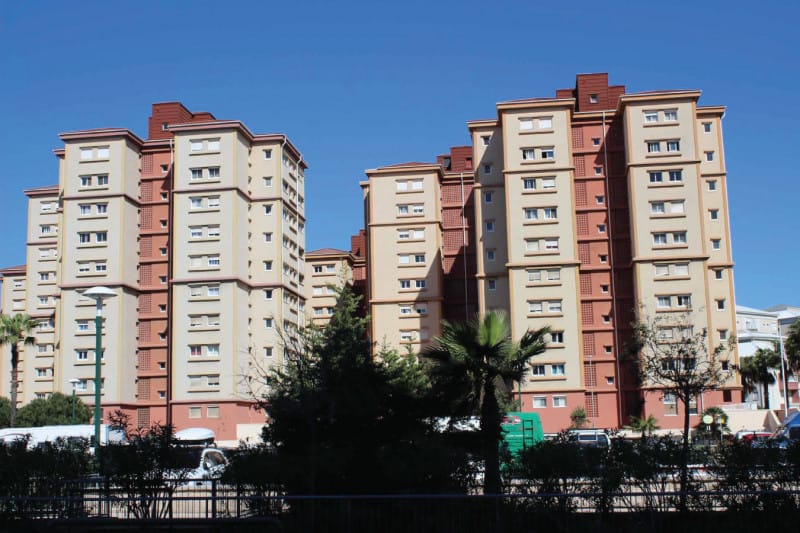
This guide explains Gibraltar’s 3-year residency rule and how the restricted property market works, including eligibility, ownership restrictions, and resale conditions.
At a glance - Restricted Property Market / 3-Year Rule:
- Restricted market (3-year residency) properties can only be bought by qualifying buyers who meet Gibraltar’s residency eligibility rules.
- Owner-occupation only: these homes cannot be let on the private rental market and must remain the owner’s residence (check covenants per development).
- Two-tier system: Gibraltar has an Open Market (anyone can buy) and a Restricted Market (residency-based restrictions).
- Covenants vary by development (resale rules, minimum ownership period, possible Government profit share/clawback).
- Eligibility is case-by-case and Government consent is typically applied for by the purchaser’s solicitor.
Table of contents
What Is the Gibraltar 3-Year Residency Rule?
Gibraltar’s property market includes a restricted property market (often called 3-year residency properties). This category exists to support affordable homeownership for long-term residents in a small, supply-constrained market.
Faced with sustained demand for social/affordable housing and rising property prices, the three-year residency rule was introduced in the early 1990s. The intention was to protect access to owner-occupied homes for residents and long-term workers, while maintaining a separate open market for unrestricted private ownership.
Open Market vs Restricted Property Market
- Open Market: Properties that can be purchased by anyone (any nationality, residency status, or purpose).
- Restricted Property Market: Properties subject to residency-based eligibility rules and restrictive covenants, designed for owner-occupation.
What Defines Restricted Market Properties?
Restricted market properties are typically homes that were:
- constructed using Gibraltar Government funding,
- developed as affordable housing schemes, or
- formerly Government-owned properties later released into private ownership.
Key rule (common across restricted properties): These homes are for owner-occupation only and cannot be used for profit. Under-letting on the private rental market is strictly prohibited. Always verify the exact covenant terms for the specific development.
Restrictive covenants vary by development, but may include:
- Minimum ownership periods before resale is permitted,
- Resale restrictions (including who the property can be sold to during the restricted period),
- Profit-sharing / clawback provisions payable to Government upon sale (in some schemes),
- Additional restrictions on selling within a set period from initial purchase (common in newer affordable housing developments).
Types of 3-Year Residency Properties
1) Shared Ownership (locally “50:50”)
Many purpose-built schemes from the 1980s/1990s were offered on a shared ownership basis (known locally as a 50:50). The leaseholder initially buys 50% of the property and can subsequently purchase further shares at market value.
No rent is payable on the share the leaseholder does not own. However, as market valuations rise over time, there is often an incentive to acquire additional shares sooner rather than later.
Examples (illustrative): Montagu Gardens and Harbour Views (Westside).
2) Former Ministry of Defence (MoD) stock released to private ownership
Some ex-MoD properties sold at tender in recent years have their own residency restrictions. These can differ from older affordable schemes and may operate over different timeframes.
Examples (illustrative): Europa Walks and The Ramps (South District).
3) Newer affordable housing developments
More recent schemes often include additional resale controls, including restrictions on selling within a defined period and, in some cases, Government participation in profit gains upon sale.
Eligibility and Proof of Residency
Eligibility is always case-by-case and the precise criteria can vary. As a general principle, a qualifying buyer(s) must be able to demonstrate continuous, unbroken residence in Gibraltar for the three years immediately prior to purchase to the relevant Government authorities.
Important: The residency rule typically applies to all parties named on the purchase agreement.
Common evidence used to demonstrate residency
- utility bills and proof of address history,
- tenancy agreements or title deeds,
- employment letters and/or pay slips,
- proof of registration with the relevant Gibraltar authorities (where applicable).
Consent from Government (where required) is usually applied for by the purchaser’s solicitor/conveyancer once the sale is agreed subject to contract. For specific eligibility or nationality-related questions, consult a local solicitor.
Common Misconceptions About 3-Year Residency (Restricted Market) Properties
“Only Gibraltarians can buy restricted (3-year) properties.”
Not necessarily. Eligibility is assessed case by case. In many situations, qualifying British citizens (Gibraltarian-born or UK-born) may purchase if they can evidence continuous residency. Other nationalities may qualify under certain circumstances — legal advice is recommended.
“You can rent out a restricted (3-year) property.”
Generally no. Restricted market properties are designed for owner-occupation and under-letting is prohibited under the lease covenants. Always confirm the specific covenants for the development and obtain legal advice before making decisions.
“You can sell a restricted property at any time.”
Often not. Many restricted properties have resale conditions such as minimum ownership periods, restricted buyer categories, and in some schemes profit-sharing/clawback provisions. The exact rules vary by development.
“Restricted properties are poor quality.”
Not true. Many developments offer solid build quality and practical layouts, and newer schemes often include modern standards (such as double glazing) and allocated parking.

FAQs About the Restricted (3-Year Residency) Property Market
What documents are needed to prove 3-year residency?
Evidence commonly includes utility bills, tenancy agreements or deeds, employment letters/pay slips, and registration documentation where applicable. Requirements can vary by case and development.
Can I rent out my restricted (3-year) property?
In general, no. Under-letting is typically prohibited by the lease covenants for restricted market properties because they are intended for owner-occupation. Always confirm the specific covenants and obtain legal advice.
Are there mortgage options available for restricted properties?
Yes. Mortgage availability depends on your circumstances, the property type (including shared ownership structures where applicable), and lender criteria. Your solicitor and broker can advise on the process and documentation.
What happens if I move away from Gibraltar after buying?
Restrictions can limit resale and typically prohibit letting while the covenants apply. If your circumstances change, speak to a property lawyer before taking any action.
How long does the buying process take?
Typical transactions often complete in around 6–12 weeks from offer to completion, depending on financing, documentation, and legal work. Timeframes can vary.
How Century 21 Gibraltar Can Help
Once you understand the restricted market rules, the next step is to confirm the specific covenants for the property you are considering and assess your eligibility. Our team can help by:
- Explaining the restricted market process and what to check before you commit,
- Reviewing eligibility requirements and what evidence is typically requested,
- Guiding you through available restricted listings and matching options to your needs,
- Coordinating with solicitors and brokers to keep the purchase process smooth and compliant.
View current restricted (3-year residency) listings: 3-year residency properties for sale.
Final Thoughts
The Gibraltar restricted property market (often called the 3-year residency market) exists to support owner-occupied homeownership for long-term residents. The key is understanding that covenants vary by development, but under-letting is typically prohibited and resale conditions often apply.
If you are considering a restricted market purchase, we strongly recommend confirming the covenants early and obtaining legal advice on your specific circumstances.
Ready to discuss your situation?
Contact our team on +350 56523000 or Email us.


